Comfort Foods, Reimagined: Finding Nourishment Without Losing the Joy
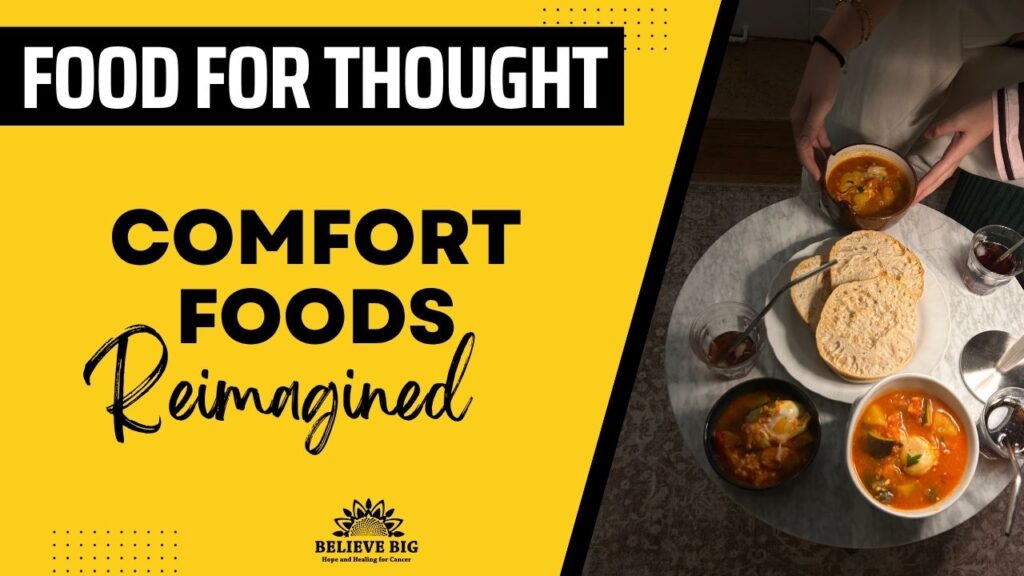
There is something about comfort food that goes far beyond hunger.
Maybe it is homemade mac and cheese that reminds you of childhood. A bowl of soup when the weather turns cold. Mashed potatoes at Thanksgiving. Pizza from the restaurant you grew up eating with people you love.
Food can bring us back to memories, places and people. And when life feels difficult, especially during illness, treatment or recovery, the pull toward familiar foods can feel even stronger.
In this episode of Food for Thought, Stacy welcomed Paula Weinberg of Healthspan Nutrition for a conversation about Comfort Foods, Reimagined and how familiar favorites can still have a place while supporting the body’s needs.
And Paula’s message wasn’t about creating another list of foods you can and cannot eat.
It was about awareness, curiosity and finding what works for you.
Why Do We Crave Comfort Food?
Cravings are not always as simple as lacking willpower.
Paula explained that many things may quietly influence what we want to eat, including nutrient deficiencies, neurochemicals, gut function and the balance of the gut microbiome.
Our emotions and memories can play a role, too.
Sometimes a food simply connects us to an experience when we felt happy, cared for or comforted. Other times, repeated and intense cravings may be worth looking at more closely.
That distinction became an important theme throughout the conversation: an occasional craving is very different from feeling as though cravings control your everyday choices.
Awareness is the first step.
Why Comfort Foods Can Feel Especially Appealing During Illness
When someone is going through illness, cancer treatment or recovery, Paula explained that digestive capacity may be reduced.
Cancer treatment can affect the gastrointestinal tract, and sometimes the large salad, hearty steak or high-fiber meal that would normally sound healthy simply doesn’t feel manageable.
That may be one reason warm, soft, carbohydrate-rich foods feel particularly appealing.
Instead of immediately labeling that desire as “bad,” Paula encouraged listeners to consider what the body might be communicating.
Maybe what sounds good is something warm, gentle and easy to digest.
The question then becomes: How can we work with that rather than against it?
Mac and Cheese: How Far Do You Want to Reimagine It?
Mac and cheese was the first test.
Stacy shared memories of the homemade mac and cheese her mother made when she was young, the warm, cheesy comfort that makes this dish such a favorite for so many people.
Paula’s first recommendation was surprisingly simple:
Sometimes, if you are craving a particular food and it is truly a one-time moment, eat the food, enjoy it and move on.
The bigger opportunity comes when that food is something you eat regularly.
That’s when you can start experimenting.
The noodles might be swapped for a gluten-free option, buckwheat noodle, higher-protein noodle, lentil noodle or chickpea noodle. Paula also encouraged being mindful of food quality when choosing ingredients.
Then there is the sauce.
Someone wanting a traditional version could simply upgrade the quality of the cheese, milk, cream and butter they use.
Someone willing to experiment more could create creaminess from ingredients such as silken tofu, soaked cashews or white beans, along with nutritional yeast for a cheesy flavor.
Paula also shared a version her children enjoyed made with cooked cauliflower, butternut squash and carrots blended with non-dairy milk, vegetable broth and seasonings.
The goal wasn’t to declare one version “right.”
It was to recognize that there is a spectrum.
You can make one small change or completely reinvent the recipe.
Mashed Potatoes: Start With a Small Upgrade
Mashed potatoes offer that same flexibility.
One easy approach Paula suggested was mixing riced cauliflower into traditional mashed potatoes. It can be a small amount for a gentle nutrient boost or closer to a half-and-half mixture for a bigger change.
She also suggested leaving the skins on softer varieties of potatoes when appropriate and experimenting with olive oil, quality broth, roasted garlic, herbs and spices instead of relying entirely on cream.
Another interesting tip came from what happens to potatoes after they cool.
Paula explained that cooling cooked potatoes creates resistant starch. The potatoes can then be reheated while retaining that change, which she described as beneficial for blood sugar response and as food for beneficial gut bacteria.
For anyone preparing mashed potatoes for a holiday meal, that means making them ahead may have an added benefit beyond simply saving time.
Soup: The Winter Version of a Smoothie
Soup may be one of the easiest comfort foods to reimagine.
Paula called it the “winter version of the smoothie” because of how many nourishing ingredients can be added to one bowl.
Starting with a good broth, soup can become a vehicle for vegetables, herbs and spices.
And it doesn’t have to stay thin.
Carrots, celery, leeks, onions, zucchini, cauliflower, bok choy, beans or potatoes can be cooked into the broth and pureed to create something thick, creamy and satisfying.
If making homemade bone broth feels like too much, Paula and Stacy also acknowledged that buying a quality prepared broth is an option.
The larger point was simple: meet yourself where you are.
Pizza Doesn’t Have to Be All or Nothing
Pizza was a little more challenging, but even there, the conversation returned to the idea of choice.
Paula enjoys cauliflower crust as a gluten-free option. Stacy mentioned sourdough and other creative crust alternatives.
But pizza is also about everything that goes on top.
Someone might keep the crust they love and simply add more vegetables. Someone who doesn’t eat dairy might experiment with a cashew-based mozzarella alternative.
Or perhaps pizza isn’t something you eat often at all.
In that case?
Maybe you simply enjoy the slice.
As Stacy and Paula repeatedly emphasized, it is the repeated daily habits that matter more than one isolated meal.
And Yes, There Can Still Be Dessert
For Paula, sweets are the comfort food she doesn’t want to live without.
Her solution is not to give them up.
She makes them herself.
By doing that, she can control what goes into them and create desserts that leave her feeling more satisfied.
The conversation touched on creative baking ingredients including black beans, avocado, zucchini, quinoa and chia, along with cacao and alternative sweeteners.
Paula also discussed using monk fruit and allulose in baking and substituting part of the oil in a recipe with applesauce. Avocado oil or milder olive oils can also be used in certain baked goods.
Again, the goal wasn’t to make dessert disappear.
It was to ask: Can this still be delicious while supporting me a little better?
What Does Your Body Actually Feel Good Eating?
Near the end of their conversation, Stacy asked perhaps the most important question of the hour:
How do we pursue nutrition without simply creating another exhausting set of food rules?
Paula’s response brought the entire discussion together.
Health isn’t built in one meal or one day.
Instead, she encouraged people to tune into their bodies and discover what makes them feel good, what she called their own “super food” or “super fuel.”
When you begin thinking that way, the conversation shifts from restriction to possibility.
Rather than constantly thinking about what you can’t eat, you begin noticing the foods that help you feel energetic, well and able to live fully.
And yes, there may still be a day when you are back in your hometown with people you love and want the pizza from the restaurant you grew up eating.
Paula’s advice?
Enjoy it.
Food can nourish the body, but familiar foods can also hold memories, connection and joy.
Comfort Foods, Reimagined isn’t about perfect eating.
It’s about becoming more aware of what you eat, how it makes you feel and where there may be simple opportunities to make the foods you already love work a little harder for your health, without losing everything that made them comforting in the first place.
Watch the full Food for Thought episode, Comfort Foods, Reimagined, and hear the complete conversation with Paula Weinberg.
https://www.believebig.org/food-for-thought-nutrition-webinar/


Paula Weinberg, JD, CNS, LDN, ONC
Integrative Oncology Nutritionist
Founder & Principal Owner – Healthspan Nutrition
Paula specializes in oncology nutrition, and is committed to empowering those affected by cancer with the most current evidence-based dietary and lifestyle changes.